The Griffith Case Dismissal
The Werewolf Mates Anthology (Erotic Romance)The Griffith Case Dismissal is the abrupt end of the prosecution against Parker Griffith, an outcome that turns Andy Olson’s difficult defense into a larger conflict over Silver Sky Research, hidden influence, and the secrecy of the werewolf community. The prosecutor’s office announces the decision in person, but the visit raises as many questions as the dismissal answers: Andy suspects a connection to information he has shared with Max, while Max refuses to confirm what role, if any, his intervention played.
Background and Investigative Threads
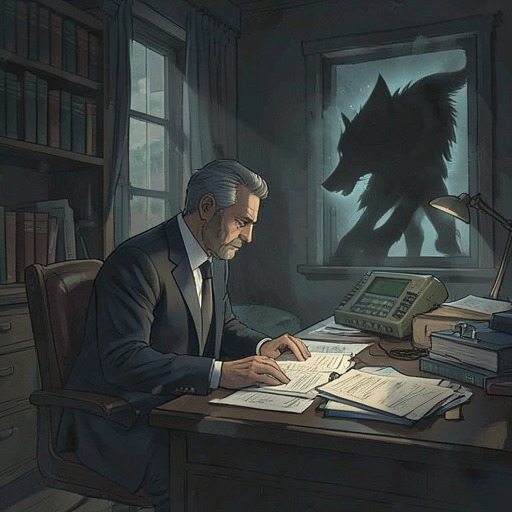
Andy had taken on Griffith’s defense because the young man’s father was a family friend, although the case looked nearly impossible from the start. Griffith had burglarized Silver Sky Research, and Andy believed the evidence against his client was so strong that conviction seemed inevitable. His father still thought the matter would give him experience, but Andy hated losing and spent several weeks arriving early and staying late, searching the evidence for a way to argue against conviction. His work produced no useful lead.
A separate detail gave the case a possible connection to Silver Sky’s internal operations. On the 28th, the company’s servers had crashed around the time of the incident. Kelly Shaw recalled that people had discussed the crash briefly before the talk faded; when she raised the date, Andy agreed that it matched. He had already seen the server failure in the police report, but had treated it as irrelevant: Griffith denied knowing anything about it, and investigators had attributed it to an internal problem. Kelly’s recollection did not establish what caused the crash, but it returned an overlooked detail to Andy’s attention.
That uncertainty matters because Max had asked whether there was gossip at work about the case and said something felt wrong about it. Andy had shared information with him, and after the dismissal Andy immediately judged that the result could not be unrelated to what Griffith had told them. The episode thus places a seemingly routine prosecution beside unresolved questions about the research facility, without proving that the server failure or the break-in caused the later legal decision.
The Prosecutor’s Visit
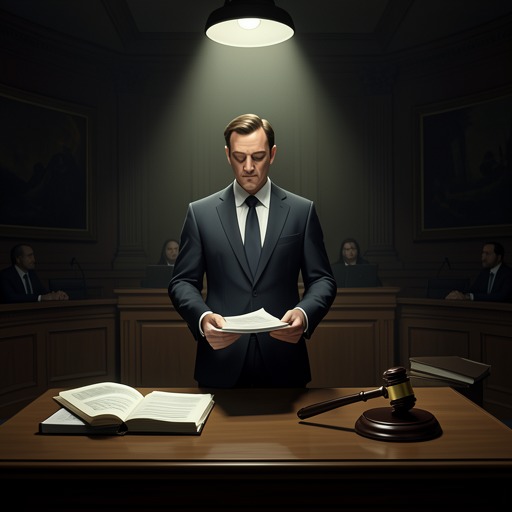
On Friday, after Wren Longwood had returned to the office and resumed working behind the closed door of her private office, an assistant prosecutor arrived without an appointment. She asked to meet with Andy and Wren privately. The three sat in a conference room overlooking the foothills, where Marina Trent, an assistant prosecutor involved in the case, informed them that the prosecutor’s office had decided to drop the case against Griffith.
Andy concealed his shock. Wren responded in a controlled, procedural manner: she said they would await the paperwork, then asked why Trent had come in person rather than calling. Andy, meanwhile, swallowed a smile. The contrast captures their different immediate responses: Wren tested the form of the announcement, while Andy suspected that the outcome confirmed a connection he had already been considering.
Trent said that Mrs. Delgado had asked her to stop by. After shaking both lawyers’ hands, she left with them accompanying her to the elevators. Once they were back in Andy’s office, Wren asked who Mrs. Delgado was. Andy explained that she was one of the werewolves and worked for the district attorney. Wren understood the significance of the name but did not continue the conversation; she returned to her work without saying goodbye. The scene identifies a werewolf presence inside the district attorney’s office, while leaving the exact part Mrs. Delgado played in the dismissal unstated.
Max’s Role and Andy’s Objection
Andy called Max, trying again until the call connected. Max said that he would have people take a closer look at Silver Sky because he was concerned by what Andy had told him. This commitment links the dismissal to a broader response to the facility, but Max did not say that his inquiry had produced the prosecutor’s decision. When Andy asked whether the two matters were connected, Max declined to confirm it.
Andy interpreted the possibility in stark ethical terms and accused Max of bribing prosecutors. Max denied that he had bribed anyone, but challenged Andy’s assumption that Andy could dictate what the werewolf community was permitted to do. He described Andy’s problem as already taken care of and ended the call, leaving Andy holding a silent phone. The exchange stops short of resolving whether Max influenced the case: the prosecutor’s visit, Mrs. Delgado’s involvement, and Max’s refusal to confirm a connection invite suspicion, but the narrative does not establish a quid pro quo.
The clash also puts two systems of obligation side by side. Andy approaches the matter as a lawyer who objects to improper pressure on a prosecutor; Max answers from a position of communal authority and practical protection. The earlier revelation that an alpha receives a small tribute, though few people actually bow, offers a glimpse of the social structure in which Max operates. Here, however, the dispute is not about ceremony. It is about whether that authority can reach into a public prosecution, and whether Andy’s professional judgment can constrain it.
Consequences and Significance
The case’s dismissal removes the immediate threat of conviction for Griffith, but it does not settle the questions around Silver Sky. Max says he will arrange a closer examination of the research facility, and Andy’s recalled server-crash clue remains an unresolved point rather than an answer. The outcome therefore closes one legal proceeding while opening a wider inquiry into what the company has been doing and how its connections may reach beyond its walls.
There is also a reason for caution beyond the case itself. Andy recognizes that Griffith must be kept quiet: an ordinary person speaking publicly about real werewolves at a research facility in Idaho could expose the hidden community. He doubts that outsiders would believe such a claim, but the werewolves protect themselves by being excessively careful. The dismissal consequently carries a double edge. It protects Griffith from prosecution and may serve the community’s interests, yet the uncertainty surrounding the decision leaves Andy troubled about the means by which protection has been secured.